I guess I just like things to be clear. Is that too much to ask?
An ambiguity is “temporary” if the intended meaning can be worked out with a little effort. These are not as painful to me as genuinely insoluble ambiguities. But they still hurt.
One example of a temporary ambiguity, to borrow the title of my own book, is a sentence in which the question “what is the ‘it’?” has to be asked, but where it can be answered with little more than the brisk rubbing together of a couple of brain cells. Example:
“The officer told the suspect that he would be going to jail.”
As ambiguities go, that seems pretty temporary. (Hint: “he” is highly unlikely to be the officer.)
Likewise with a missing or badly placed comma: it may well be that the meaning of the sentence might nevertheless become clear after only the briefest exercising of the old grey matter.
Depending on the time constraints you, as a judge’s associate, are working under, you will possibly have little choice but to leave a lot of temporary ambiguities untouched. (Obviously, your judge’s judgment will be a better judgment if you are able to tidy them up; I’m just acknowledging the practical reality of the situation you will most likely find yourself in.)
But I want to spend a few minutes looking at one common vehicle for temporary ambiguity: the invisible “that”.
Sometimes the absence of a “that” is going to do no harm. It probably won’t even be noticed. Here is a simple example:
“The jury must be satisfied the co-accused agreed something would be done.”
There could have been a “that” after “satisfied”. There could also have been a “that” after “agreed”. Either or both of those might have made the sentence marginally more transparent; but, really, the passage through the sentence should be tolerably well lit either way.
This next sentence, though, is not as easy to get through:
“Their Honours considered the first question in the special case should be answered “yes”.”
The problem for a reader who is having their first run at this sentence is the number of words that appear between the invisible “that” (ie, after “considered”) and the first clue that there is, in fact, an invisible “that” (ie, the word “should”).
The natural reading of the string of words in front of the reader is:
“Their Honours considered the first question in the special case.”
And that reading makes perfect sense.
Until the reader hits the word “should”.
Oh.
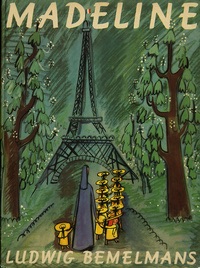
Then, and only then, is it going to dawn on the reader – just as, in an old house in Paris all covered in vines, it once dawned on Miss Clavel in the middle of the night – that something is not right.
The reader, having (through no fault of their own) misunderstood what type of sentence they were reading, is going to have to go back and read it again. That doesn’t seem fair. And it didn’t have to be that way.
If I found this sentence in a judgment I was proofing, I would be suggesting that the invisible “that” be made visible. Here is what this would look like:
“Their Honours considered that the first question in the special case should be answered “yes”.”
There is only one way through that sentence: the right way.
Of course, there is a large grey area between the first example above (which didn’t really need a “that”) and the second (which did). If your judge is the type of judge who seems to be allergic to the word “that” (I don’t understand this, but then again I am not a judge), there is nothing to be gained by trying to convince them to add a “that” everywhere one could have been added. Keep your powder dry. If it is only going to take a couple of words before the reader recognises their wrong turn, then there is no real harm being done. But much more than that and I reckon you owe it to the reader to at least have a go.

 What is the 'it'?
Leave a comment