Much of the time, commas are little more than convenient signalling devices, showing the reader how the various components of a sentence are supposed to work together. Often enough, the reader is going to be able to figure out what the sentence is telling them even if there is not a comma in sight. Occasionally, though, the absence of a comma can cause a sentence to say something that is in fact wrong. Or, at least, technically wrong – which, as you know, I am more than happy to argue amounts to the same thing.
Consider the following statement:
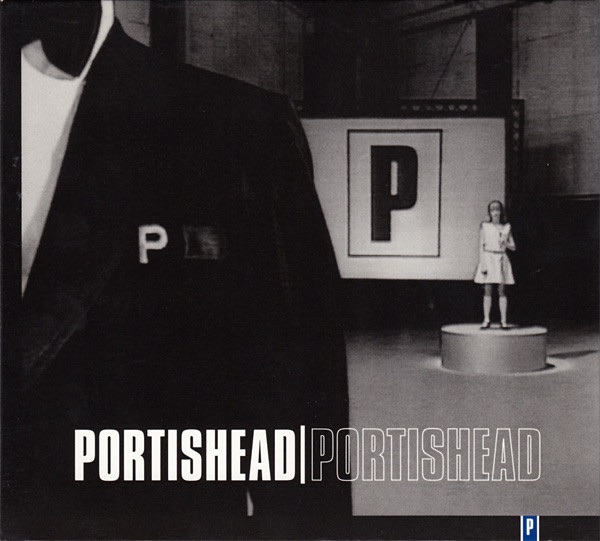
“I was listening to Portishead’s second self-titled album.”
What, according to that sentence, was I listening to?
For the benefit of the uninitiated, I will start with a fact: the second album by the band Portishead is titled “Portishead”. I have listened to it many times over many years. Heck, I may even have an unhealthy obsession with it. Unlike their first album, “Dummy”, which seemed to be emanating from the speakers in every inner-Melbourne cafe during the 1990s, and which slides down one’s ear canal like warm honey, their second album is a mystery – a puzzle that I have always felt one elusive piece away from solving.
In the meantime, and because this is not a music blog, I am going to limit myself to discussing a technical problem with that sentence: what do the words “Portishead’s second self-titled album” convey?
They convey – “technically”, if you insist, but they genuinely do convey – that there are two albums by Portishead called “Portishead”, and that I was listening to the second of those.
This is because there can only be a second self-titled album by Portishead if there has already been a self-titled album by Portishead. But Portishead have only released one self-titled album. That it is their second album is true but irrelevant.
If I really was listening to “Portishead’s second self-titled album”, I would have been listening to something that doesn’t exist.
How, then, can I convey that what I was listening to was Portishead’s second album, and that Portishead’s second album is titled “Portishead”? Hmmm. I wonder what would happen if I added a comma:
“I was listening to Portishead’s second, self-titled album.”
The comma works as an “and”; it tells the reader that the first adjective (“second”) isn’t qualifying the second adjective (“self-titled”) – which is how things work without the comma – but is instead one of two separate adjectives, both of which are qualifying the word “album”. In other words, the comma operates as a kind of shorthand for what would otherwise be a longer sentence:
“I was listening to Portishead’s second album, which is self-titled.”
Or even two sentences:
“I was listening to Portishead’s second album. The album is self-titled.”
The comma is a much simpler solution.
Does any of this really matter? Maybe not. Either the reader is going to be familiar with Portishead’s oeuvre, in which case they will be in no doubt as to what I was listening to, comma or no comma; or they won’t know anything about Portishead and therefore will neither be interested in nor care about anything I might have to say on the subject.
But an analogous sentence could appear in a judgment, where a literal reading could be more problematic. For example:
“The defendant’s lawful act was followed by another unlawful act.”
The problem here is the same: what do the words “another unlawful act” convey? There can only be another unlawful act if there has already been an unlawful act. But the sentence has only referred to a lawful act. Thus, the sentence is, at least, unclear. It might send the reader off on a pointless search for the earlier unlawful act (which, grammatically, must exist, but which might not actually exist at all). In the broader context of the judgment, this could be harmless, but it could also be confusing or even misleading, especially if the facts are complex.
You are welcome to roll your eyes at all of this and throw a well-weighted “technically” at me. But technical schmechnical: the words say what the words say. And what they say might not be quite what was intended.
What to do?
You could simply replace “another” with “an”:
“The defendant’s lawful act was followed by an unlawful act.”
That might be a true statement. But it would also be a different sentence from the one the judge had written; the “another” was presumably included for a reason – perhaps to provide some sort of emphasis.
It’s not my job – or yours – to change what the judge has written; when we are proofing a judgment, all we should be doing is making sure that what the judge has written is what the judge thinks they have written.
Fortunately, there is a solution that clears that hurdle. As with the Portishead example, inserting a comma after “another” solves the grammatical problem, without altering the cadence of the original sentence. In fact, it might even bolster the (presumably intended) emphasis:
“The defendant’s lawful act was followed by another, unlawful act.”
You can almost see the italics hovering over the “un” in the word “unlawful”.
The important thing, though, is that the added comma conveys that the words “another” and “unlawful” are separately qualifying the word “act”; the judge is talking about two acts, the first being a lawful act and the second being an unlawful act.
* * *
With apologies to anyone who has read this far, I am feeling an urge to take things one step further. (You are, of course, free to leave.)
Here is a slightly different sentence:
“The defendant’s first lawful act was followed by a second unlawful act.”
I was confronted not long ago with a sentence that was, essentially, a variation on this theme. I couldn’t let it go without comment. If we have a “first lawful act” and a “second unlawful act”, how many acts are we dealing with? And which of them is the judge referring to? It is, at least, unclear. There may be a situation in which what the judge wrote is in fact correctly unpunctuated. But that would most likely be down to serendipity: the facts would have to involve at least two lawful acts and at least two unlawful acts. More likely, a reader confronted with this sentence will be reflecting – negatively – on the judge’s ability to punctuate a sentence.
I had wanted to add two commas to the sentence:
“The defendant’s first, lawful act was followed by a second, unlawful act.”
But whichever way I came at it, I couldn’t warm the judge’s associate to that idea. They didn’t think they would be able to sell it to their judge. That’s fair: if I can’t engage an associate with the substantive reason for making a change to their judge’s judgment, I can’t really ask them to sell it to their judge; that’s on me.
After talking it around for a bit, the associate raised the possibility of adding not two but four commas:
“The defendant’s first, lawful, act was followed by a second, unlawful, act.”
Four commas were two more than I felt were needed, but (occasionally) I know when to keep my thoughts to myself. I got the commas I wanted, and the other two weren’t going to do any harm.
Is the four-comma version of that sentence saying anything substantively different from my proposed two-comma version? If it is, I’m not seeing it. It might be possible to imagine a sentence in which there would be a difference. And there may be a slight difference in the weight the reader gives to the words “lawful” and “unlawful”. But that seems marginal. The important point is that the two-comma sentence and the four-comma sentence are both saying something different from the original, no-comma sentence – technically, if you must, but also actually – and that they both accurately convey what the judge intended to say.

POSTSCRIPT
At the risk of tumbling down a nineties-music rabbit hole, an interesting comparison to Portishead would be Tindersticks. Their first album is called “Tindersticks”. Their second album is also called “Tindersticks”. (One suspects that the marketing department at This Way Up might have had some thoughts about this.) Thus, unlike with Portishead, if you were to write:
“I was listening to the second self-titled album by Tindersticks”,
you would be saying the exact same thing as if you had written:
“I was listening to the second, self-titled album by Tindersticks.”
It is both the second Tindersticks album, and the second self-titled Tindersticks album.
Not only that, but both of those sentences would also be saying the exact same thing as:
“I was listening to the self-titled second album by Tindersticks.”
And all of those sentences would be saying the exact same thing as:
“I was listening to the self-titled, second album by Tindersticks.”
Well, to be honest, I’m not entirely certain that that last sentence is saying the exact same thing as the others. It is possible that the comma in that sentence carries within it an implication that there is only one self-titled Tindersticks album. (I’m not sure what other work the comma could be doing.) And that would be wrong.
Adjectives, innit.

 What is the 'it'?
Leave a comment